Public awareness of threatened species is increasing, along with engagement in nature conservation – LIFE FOR SPECIES survey reveals positive trends
As part of the LIFE FOR SPECIES project, a follow-up sociological survey was conducted in autumn 2025 to assess the level of public awareness, attitudes, and involvement of Latvian society in the protection of threatened species. The results indicate that society in Latvia is becoming more informed and more actively engaged in species conservation. Compared to the first survey conducted in 2021, there has been a significant increase both in public knowledge about threatened species and in willingness to participate in nature conservation activities.
These results are also positively evaluated by the project team. Project manager Gunta Čekstere-Muižniece comments:
“The results are truly encouraging. They confirm that the activities implemented in recent years to raise public awareness and promote engagement in nature conservation — including the protection of rare, protected, and threatened species — have been meaningful. This clearly shows that the work we have started must continue. At the same time, these achievements are the result of the collective efforts of everyone involved in the nature conservation sector.”
Awareness is increasing
The latest data show that 41% of Latvia’s population now describe their level of awareness about threatened species as good — an increase of 20 percentage points compared to 2021, when only about one fifth of respondents gave such an assessment.
At the same time, 58% of respondents still consider their knowledge to be poor or rather poor; however, this figure has also significantly decreased (by 17 percentage points).
A similar trend is observed regarding knowledge of actions individuals can take to protect species — 28% of respondents report being well informed (+7% compared to 2021).
Public engagement in nature conservation – a sharp increase across activities
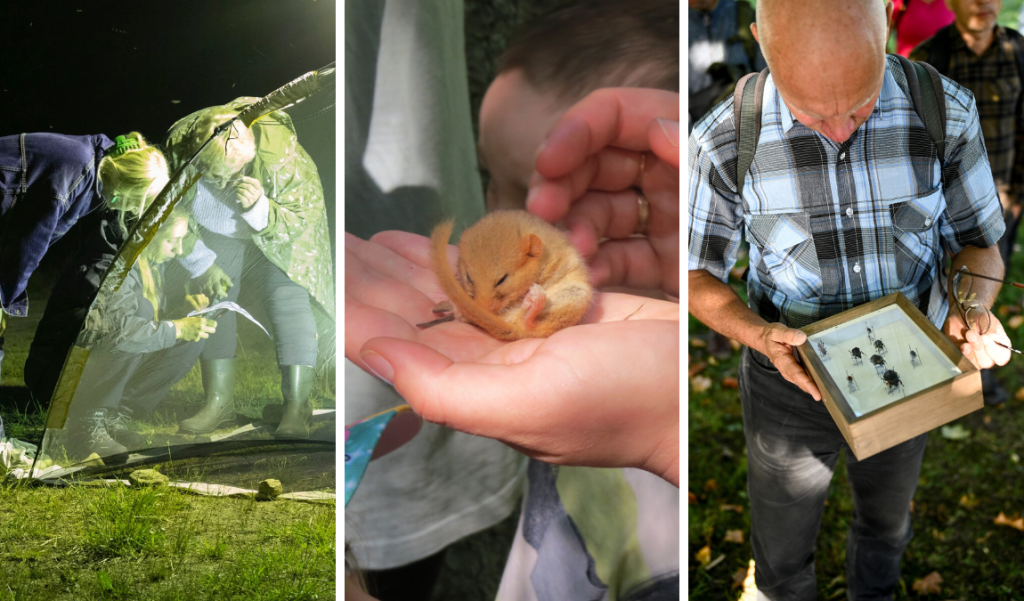
The survey results demonstrate growing public involvement and participation in nature conservation. Increasingly, people not only express support for conservation ideas but also take practical action — complying with rules in protected areas, choosing environmentally friendly products, reporting violations, and contributing to the preservation of habitats for protected species on their own properties.
Since 2021, there has been a notable increase in the number of people who participate in various initiatives and follow developments related to species protection. This indicates a growing willingness within society to take greater personal responsibility for nature and the environment. The trend suggests that nature conservation in Latvia is increasingly becoming a shared responsibility rather than solely the domain of experts and institutions, with society ready to act as an active partner in the conservation process.
Encouragingly, more than half of respondents (53%) report that they consciously consider the conservation of rare and protected species when managing their own property — an increase of 25 percentage points compared to 2021. This practice is particularly common among landowners (65%) and residents of rural areas (62%).
The new Red Data Book
The Latvian Red Data Book remains widely recognized — 91% of the population have heard of it. The survey shows that public interest in this resource remains consistently high, with an increasing number of people using it in practice, for example in education or professional work.
However, awareness of the new edition of the Red Data Book — currently being developed and soon to be published — remains low, with only 7% of respondents aware of it. This highlights the need for broader communication about the upcoming publication and ensuring accessibility of its results in both printed and digital formats.
The new edition of the Red Data Book (six volumes), developed within the LIFE FOR SPECIES project, was officially launched at the beginning of 2026. It provides up-to-date, scientifically grounded information on threatened species in Latvia, as well as regionally extinct species and species that may potentially become threatened. The electronic version of the book is freely available to all interested users.
The survey was conducted in cooperation with the market and social research centre Latvijas fakti in autumn 2025 across Latvia, surveying at least 1,000 respondents aged 18 to 75.