
Final seminar of the LIFE FOR SPECIES project held
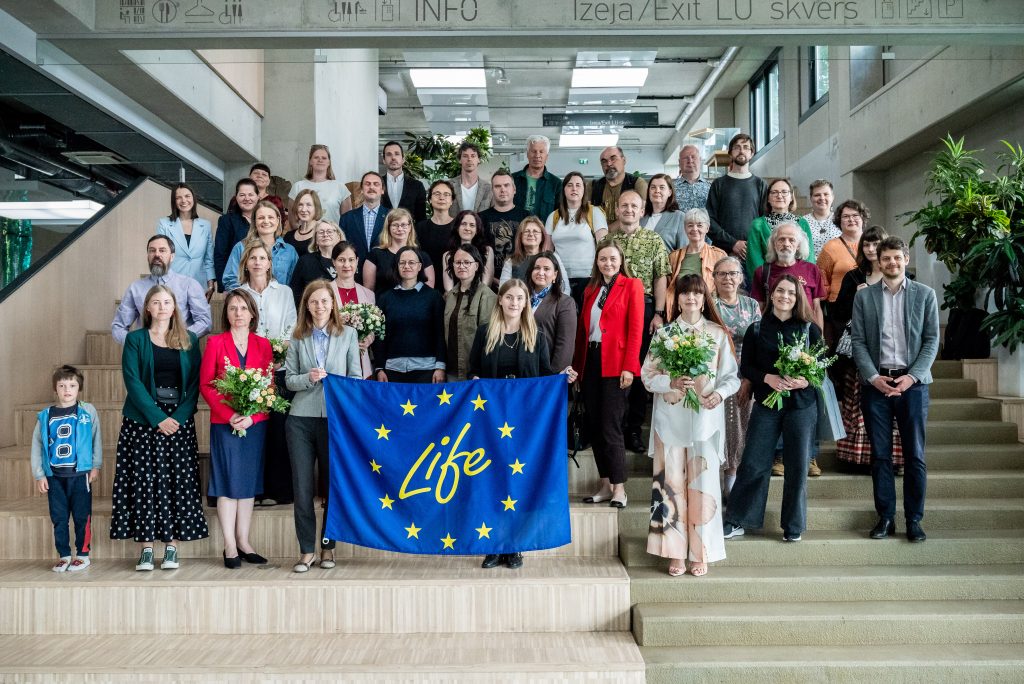
On 3 June 2026, the final seminar of the LIFE FOR SPECIES project was held at the University of Latvia, bringing together more than 120 participants both on site and online. During the event, project partners, experts, representatives of public administration and nature conservation professionals reflected on the work carried out throughout the project and discussed the importance and future use of the Latvian Red Data Book in species conservation.
The recording of the event is available here!
The seminar was opened by Guntars Kitenbergs, Vice-Rector for Science at the University of Latvia; Laura Anteina, Director General of the Nature Conservation Agency; and representatives of the project partners: Laura Sandere from Daugavpils University and Viesturs Ķerus, Chair of the Board of the Latvian Ornithological Society. Opening remarks were also delivered by representatives of the project’s funding and monitoring bodies: Ilona Mendziņa from the Ministry of Smart Administration and Regional Development, and project monitor Aija Kažociņa.
Photos from the event are available here!
The thematic part of the seminar began with a presentation by Ilona Mendziņa, representative of the Ministry of Smart Administration and Regional Development and the LIFE Programme National Contact Point in Latvia, who outlined current priorities in species conservation in Latvia and Europe. The results of the LIFE FOR SPECIES project and their practical application were then presented by project coordinator Jēkabs Dzenis from the Nature Conservation Agency and project communication manager Madara Indāne from the University of Latvia.
The seminar also included contributions from foreign experts, who shared experience from the Baltic region. Polina Degtjarenko presented current issues related to the Red Data Book and species conservation in Estonia, while Domas Uogintas and Valerijus Rašomavičius presented Lithuania’s experience in applying the IUCN criteria and working on species conservation issues.
The second part of the event featured a panel discussion titled “Joint Efforts in Nature Conservation: The Red Data Book in the Baltic Context”, bringing together experts from Latvia, Lithuania and Estonia. The discussion focused on how Red Data Books and species extinction risk assessments can be used in practical nature conservation, scientific research, public awareness and policymaking. Participants also discussed how to measure the impact of the Red Data Book and how to maintain public and political interest in the conservation of threatened species after its publication.
A significant part of the discussion was dedicated to cooperation between the Baltic countries. Experts considered how Latvia, Lithuania and Estonia could work more closely together on species extinction risk assessment, expert involvement and data exchange. The discussion also touched on the possibility of stronger regional cooperation and, in the future, even a common Baltic-level approach to Red Data Book-related issues.
Special attention was also given to the future of the Latvian Red Data Book. The discussion participants emphasised that species extinction risk assessment should become a regular and systematic process, rather than an activity carried out only within individual projects. They highlighted the need for continuous expert involvement, cooperation between public administration and scientific institutions, and a sustainable mechanism for regularly assessing the status of species in Latvia.
The closing remarks were delivered by Gunta Čekstere-Muižniece, the initial project manager, who reflected on the origins of the project and its importance for Latvia’s nature conservation system.
Although the LIFE FOR SPECIES project is coming to an end, work in the field of species conservation will continue. We would like to thank all partners, experts, participants and supporters for their contribution to the implementation of the project. We will continue to share the project results and future updates through the project’s communication channels.